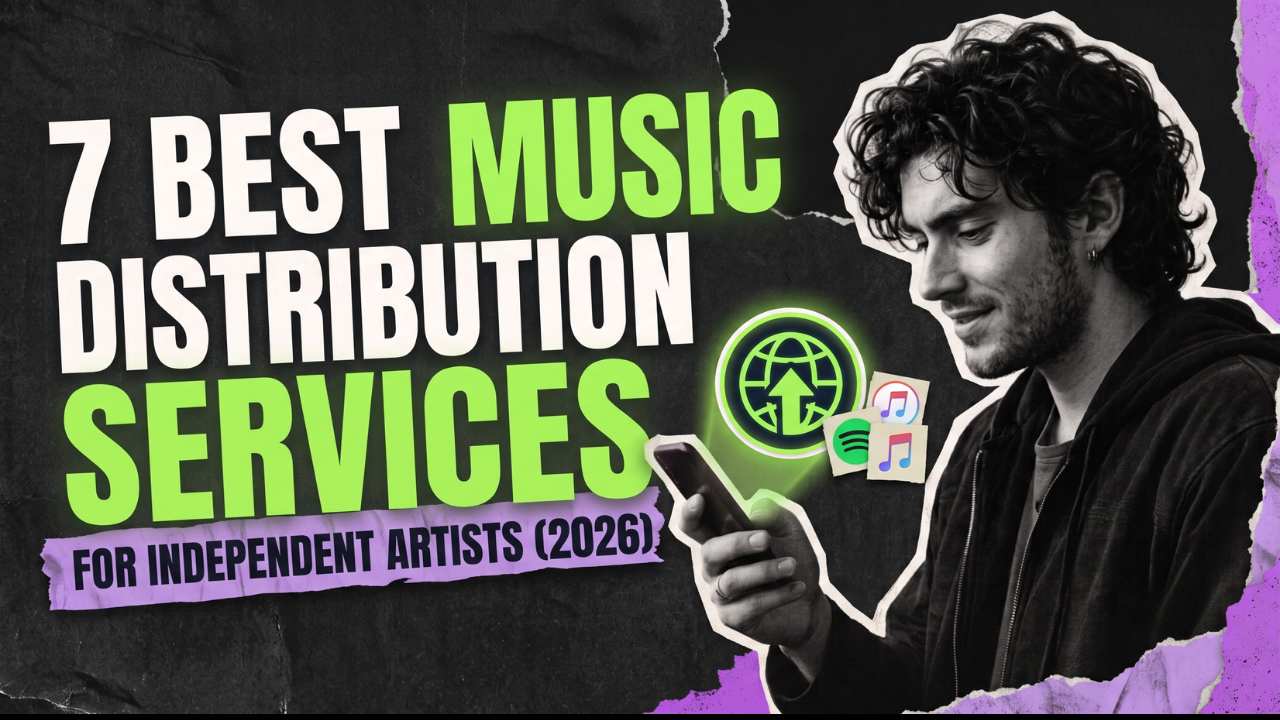
7 Best Music Distribution Services for Independent Artists (2026)
Oct 12, 2026There is no single best music distributor for every independent artist. The right choice depends on how often you release, whether you prefer a subscription or a one-time fee, how many artist profiles you manage, and which extras you will actually use.
This guide compares seven widely used services using their current public information. Prices and plan features can change, so confirm the final cost on the provider's website before paying.
Quick comparison: which music distributor fits you?
| Distributor | Payment model | Best fit | Check before joining |
|---|---|---|---|
| DistroKid | Annual subscription | Artists releasing frequently | Plan limits and optional release extras |
| CD Baby | One-time fee per release, plus commission | Artists who dislike annual renewals | Commission rates for each revenue type |
| TuneCore | Annual plans; pay-per-release option may be available | Artists wanting tiered tools and support | Store, social-platform and plan-specific revenue terms |
| Ditto Music | Annual subscription | Artists or labels releasing unlimited music | Number of artists included in the plan |
| Amuse | Annual subscription | Mobile-first artists who value fast delivery | Release lead time and fees on selected extras |
| LANDR | Annual subscription | Artists also using mastering and production tools | Which production tools are included at each tier |
| AWAL | Selective, application-based partnership | Artists with traction seeking label-style services | Acceptance, commission and deal-specific terms |
Checked October 2026. This table describes the providers' broad models, not a promise that every feature is included in every country or plan.
How to choose a music distributor
1. Calculate the cost across your actual release plan
A low annual price can work well if you release every month. A one-time fee can be easier to manage if you release one single or album and want to avoid renewals. Compare the cost over two or three years, including add-ons, extra artists, collaborator splits and any commission.
2. Read what happens when you stop paying
Do not assume every subscription works the same way. Check whether releases stay live after cancellation, whether a separate legacy option exists, and whether you can transfer a catalogue without losing stream counts. Keep your ISRCs, UPCs, original release dates and metadata so a future distributor can preserve the release correctly.
3. Match the service to your team
A solo artist may need one profile and simple royalty collection. A label or manager may need several profiles, team permissions, automated splits and detailed statements. Paying for features you will not use rarely improves a release.
4. Check delivery and support before a deadline
Fast delivery claims are useful, but a store can still need time to ingest and review a release. Spotify recommends setting the live date at least seven days ahead so the track can be pitched before release. For a serious campaign, leave more time for distributor review, artist-profile mapping and corrections.
5. Separate distribution from promotion
A distributor delivers your recording and metadata to services and pays the recording royalties it collects. That alone does not create listeners. You still need a release plan, audience content and promotion. Also check whether you need separate publishing administration or collection services for songwriting royalties.
The seven distributors
1. DistroKid
DistroKid uses annual membership plans and is built for frequent releases. Spotify lists it as a preferred artist distributor and says its users receive instant access to Spotify for Artists. It is a practical shortlist choice when unlimited uploads and simple collaboration splits matter.
Best for: prolific independent artists. Watch for: optional extras and what your selected membership covers.
2. CD Baby
CD Baby charges once per release rather than annually. Its current public pricing starts at $9.99 for a single and $14.99 for an album, while CD Baby keeps 9% of download and streaming revenue. That trade-off can suit an artist who releases less often and would rather pay per project.
Best for: occasional releases and artists who want no recurring distribution fee. Watch for: commissions differ across digital distribution, publishing-related collections, social video and sync.
3. TuneCore
TuneCore offers tiered distribution options and describes its core product as global unlimited distribution with artist ownership. It may appeal to artists who want a recognised provider with analytics, marketing programmes and higher support tiers.
Best for: artists who want plan choice and an established dashboard. Watch for: compare the exact royalty and feature terms for stores, social platforms and optional services.
4. Ditto Music
Ditto's current support material describes annual Starter, Pro and Label subscriptions based on the number of artists managed. Plans allow unlimited releases to major streaming, download and social platforms. This structure is straightforward for a steady schedule or a small roster.
Best for: active artists and small labels. Watch for: choose the plan by artist count, not only by headline price.
5. Amuse
Amuse currently offers paid annual plans with unlimited distribution. Its public comparison lists different artist limits and scheduling windows by tier, plus selected fees for features such as Content ID, collaborator splits and Store Sync. It also states that music stays live after downgrading.
Best for: artists who want a mobile-friendly workflow and clearly tiered release speeds. Watch for: the lowest plan may have a longer minimum scheduling window and fees on some extras.
6. LANDR
LANDR combines distribution with mastering, samples, plugins and collaboration tools. Its distribution offer centres on annual plans, unlimited releases and keeping 100% of distribution royalties. The value is strongest when you will also use its production ecosystem.
Best for: DIY artists who want production and distribution together. Watch for: compare a distribution-only plan with the broader studio bundles before paying.
7. AWAL
AWAL is different from open self-service platforms. Artists apply, and accepted acts may receive distribution plus marketing, funding or campaign support depending on the relationship. It belongs on the list as an option for artists who already have momentum, not as a guaranteed first-release route.
Best for: growing artists with measurable traction. Watch for: selection is not automatic, and commercial terms depend on the agreement offered.
Which distributor should you pick?
- You release often: start by comparing DistroKid, TuneCore, Ditto, Amuse and LANDR.
- You release occasionally: compare CD Baby's one-time fee with the multi-year cost of a subscription.
- You manage several artists: compare artist limits, team access, splits and reporting before the headline price.
- You already have traction: an application-based partner such as AWAL may be worth considering alongside self-service distribution.
- You want production tools too: test whether LANDR's wider bundle replaces tools you already pay for.
Before committing, use Spotify's Provider Directory to confirm which companies currently meet its delivery standards. Then read the distributor's live pricing and cancellation terms.
FAQs
Do I need a distributor to upload music to Spotify?
Yes. Spotify tells independent artists to work with a distributor. The distributor delivers the recording and metadata, manages licensing and pays the recording royalties it receives.
Can I change distributors without losing streams?
Usually, a careful catalogue transfer can preserve the release, but it is not automatic. Reuse the same ISRC, audio, metadata and original release date, wait for the replacement delivery to appear, and follow both distributors' transfer instructions before removing the old version.
Does a distributor collect every royalty I am owed?
No. Distribution income concerns the sound recording. Songwriters may also need a performing-rights organisation, mechanical collection and/or publishing administration, depending on their rights and country.
How early should I deliver a release?
Spotify recommends a live date at least seven days in the future so you have time to pitch an unreleased song. Give yourself additional time if your distributor reviews submissions or if you may need to correct artwork, credits or artist mapping.
Final checklist before paying
- Calculate two or three years of fees for your expected number of releases.
- Read the cancellation and takedown policy.
- Check commissions on streaming, social video, publishing and sync separately.
- Confirm artist-profile limits, team access and royalty splits.
- Save every ISRC, UPC, master file and final metadata sheet.
Distribution gets the song into stores. Promotion gives people a reason to listen. Once your release is delivered, build a focused campaign around your strongest track. If you want independent curators to consider it, submit it through the GreaseRelease music submission platform.
Don't miss my newsletter!
Join me on a music entrepreneurship journey with new tips and tricks delivered straight to your inbox.
We hate SPAM. We will never sell your information, for any reason.