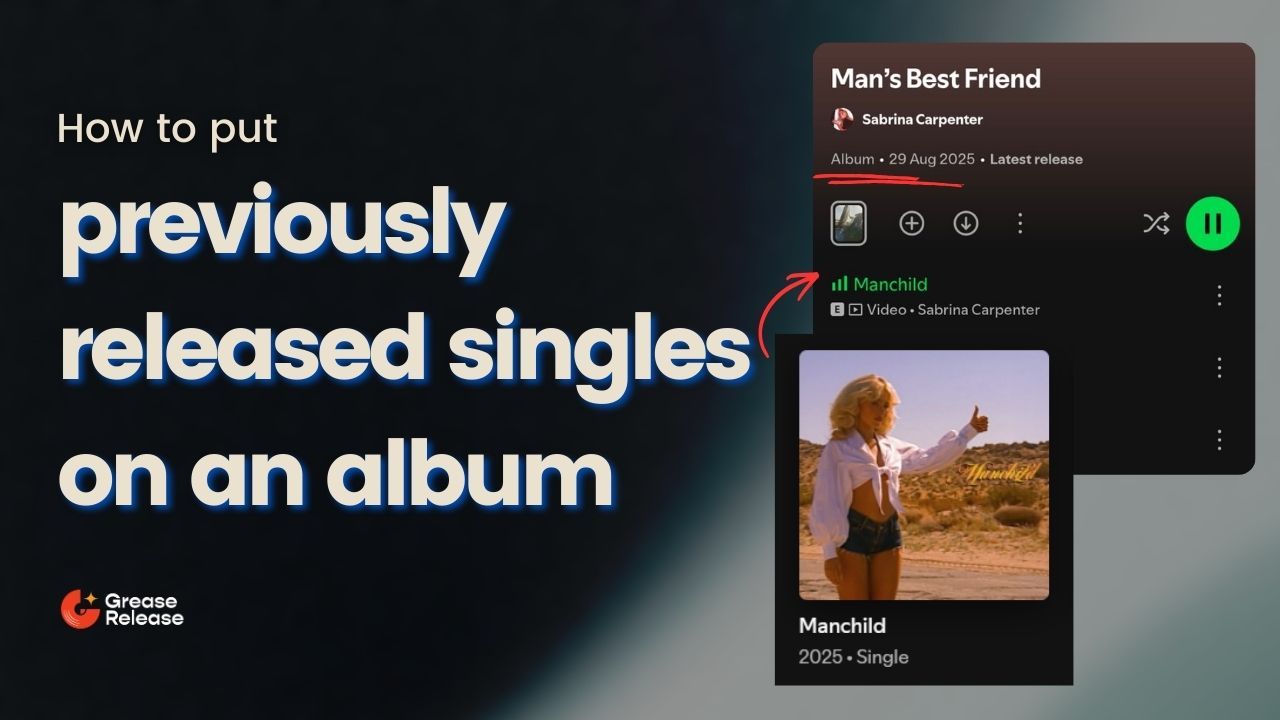
How to Put Previously Released Singles on an Album
Jan 12, 2026
Releasing singles before an album, is no longer merely a trend, it’s a smart survival strategy in today’s streaming-first music industry. Singles help you test your sound, build hype, attract playlist placements, and grow an audience long before your album drops.
But when it’s finally time to package those singles into a full album or EP, many artists hit the same wall:
“How do I include my previously released singles without losing my streams?”
If that question has ever crossed your mind, you’re not alone. Let’s break it down clearly, here.
- How ISRCs Retain Streams When Singles Go on an Album
- How to Add a Previously Released Single to an Album Without Losing Streams
- Common Mistakes When Adding Previously Released Singles to an Album
- When You Should Not Reuse an ISRC
- How Physical Album Releases Affect Metadata
- FAQs
- The Bigger Picture
How ISRCs Retain Streams When Singles Go on an Album
ISRC (International Standard Recording Code) is the unique identifier for a specific recording. Think of it as your song’s digital DNA. Streaming platforms don’t recognize songs by title, they recognize them by ISRC.
If the ISRC matches, the platforms know it’s the same recording.
If it doesn’t, your streams start from zero. As simple as that.
How to Add a Previously Released Single to an Album Without Losing Streams
When submitting your album:
- Add the single again to the album track list.
- Select “I already have an ISRC.”
- Paste the exact ISRC from your single release.
- Make sure all metadata matches perfectly, title, artist name, featured credits, and formatting.
- For new songs, let your distributor assign fresh ISRCs.
That’s it. Your play counts stay connected. Here’s a Youtube video explaining just that.
Common Mistakes When Adding Previously Released Singles to an Album
Most stream losses happen because of small mistakes:
- A missing “feat.”
- Different capitalization in the title
- Slight spelling differences in artist names
- Accidentally generating a new ISRC
Streaming platforms are not forgiving about details. If it’s not identical, it’s not the same recording.
When You Should Not Reuse an ISRC
Here’s a critical truth many artists ignore:
If the audio changes, the ISRC must change.
That includes:
- Remixes
- Radio edits
- Extended versions
- Re-recordings
- Acoustic or live versions
- Slowed Versions etc.
Even if it’s 95% the same song, it’s legally and technically a new recording.
How Physical Album Releases Affect Metadata
This is where many artists unknowingly step into a technical minefield.
When you release music physically, the industry no longer treats your album as just “music”, it treats it as a product line. And every product line needs to be tracked correctly. That’s where UPCs come in.
Think of a UPC like a barcode in a store. The same shirt in two different colors gets two different barcodes. Music works the same way.
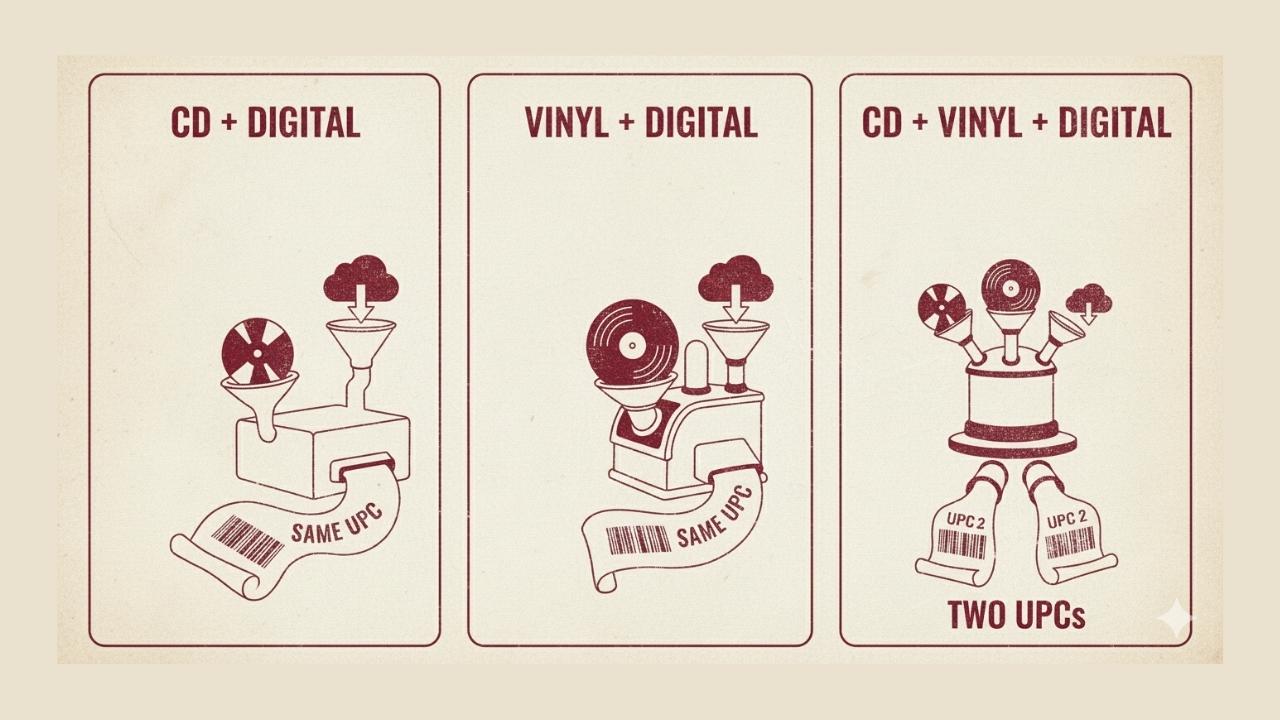
How UPCs Work for Albums with Physical Formats
1. CD + Digital
If you release your album on CD and digital platforms only, you can use one UPC for both.
Why? Because the CD and its digital counterpart are considered one product family.
2. Vinyl + Digital
If you release your album on vinyl and digital only, you can also use one UPC for both.
Again, same logic — one physical format + digital equals one product group.
3. CD + Vinyl + Digital
This is where things change.
If you release CD, vinyl, and digital together, you now have two physical product families:
- CD + Digital
- Vinyl
Which means you need two UPCs:
- One UPC for CD + Digital
- One UPC for Vinyl
Why? Because CDs and vinyl are manufactured, distributed, stocked, and sold through completely different retail pipelines. The industry needs to track their performance separately.
FAQs
1. Can I add previously released singles to an album without losing streams?
Yes. As long as you reuse the same ISRC and keep all metadata identical, streaming platforms will recognize the album track as the same recording and retain your existing streams..
2. Do I need to delete my single before releasing the album?
No. You should not delete the single. Keeping it live helps preserve stream data and playlist placements. The album version will link automatically if the ISRC matches.
3. What metadata must match to keep my streams?
Everything. The song title, artist name, featured credits, version labels, and ISRC must be exactly the same. Even small differences can cause your streams to reset.
4. When should I use a new ISRC instead of reusing one?
You must use a new ISRC if the audio changes in any way, including remixes, edits, remasters, live versions, or re-recordings. Any audio change creates a new recording.
5. Will my single’s streams and playlists carry over to the album?
Yes. When the ISRC matches, your streams, algorithmic data, and playlist placements stay connected across both the single and album versions.
The Bigger Picture
Singles are marketing tools. Albums are storytelling tools. Your job as an artist is to connect both worlds without breaking the data in between. When you handle your ISRCs and UPCs correctly, you’re not just protecting numbers, you’re protecting your growth history. If you want your album to reflect your journey instead of restarting it, treat your metadata with the same respect you treat your music.
We at GreaseRelease, have a bunch of curators on our network who are looking for new & exciting music to push on their massive playlists. If you make music and want to reach a wider audience, check out our submission platform and get a chance to reach millions of listeners! Submit your tracks now!
Don't miss my newsletter!
Join me on a music entrepreneurship journey with new tips and tricks delivered straight to your inbox.
We hate SPAM. We will never sell your information, for any reason.