How to Write a Song in 2026
Feb 02, 2026
Writing a song can feel magical… and frustrating. One moment you have a melody looping in your head, the next you’re staring at a half-finished voice memo, wondering why it doesn’t sound like a “real song.” If that’s you, here’s the truth upfront: most songwriting problems aren’t about talent, they’re about song structure.
Once you understand how song structure works and how to use it practically, songwriting becomes clearer, faster, and way more enjoyable. This guide blends creative freedom with real-world techniques so you can actually finish songs, not just start them.
- What Does “Writing a Song” Really Mean?
- Step 1: Start With One Clear Idea (Not a Full Song)
- Step 2: Choose a Song Structure Template Early
- Step 3: Write the Chorus First (Yes, Really)
- Step 4: Use Verses to Build, Not Compete
- Step 5: Decide If You Actually Need a Bridge
- Step 6: Match Melody to Emotion, Not Perfection
- Step 7: Edit With Structure in Mind
- Final Thought: Finish More Songs
What Does “Writing a Song” Really Mean?
At its core, writing a song means shaping emotion into something repeatable and memorable. That’s where song structure quietly does the heavy lifting.
The structure of a song gives your ideas direction. Without it, even great melodies drift and feel incomplete. With it, simple ideas become complete songs.
Think of song structure as a container, not a rulebook. It doesn’t limit creativity; it protects it.
Step 1: Start With One Clear Idea (Not a Full Song)
Before touching chords or lyrics, pause.
Ask yourself:
- What emotion is this song about?
- What do I want to write about?
- Can I say it in one sentence?
That single sentence becomes the emotional compass for your song structure. Every verse, chorus, and bridge should serve that idea. This step alone fixes most unfinished songs.
Step 2: Choose a Song Structure Template Early
One of the biggest beginner mistakes is writing randomly and hoping a structure appears later. Instead, pick a song structure template upfront. Be aware of the different sections of the song and feel free to include or exclude them as the song demands.
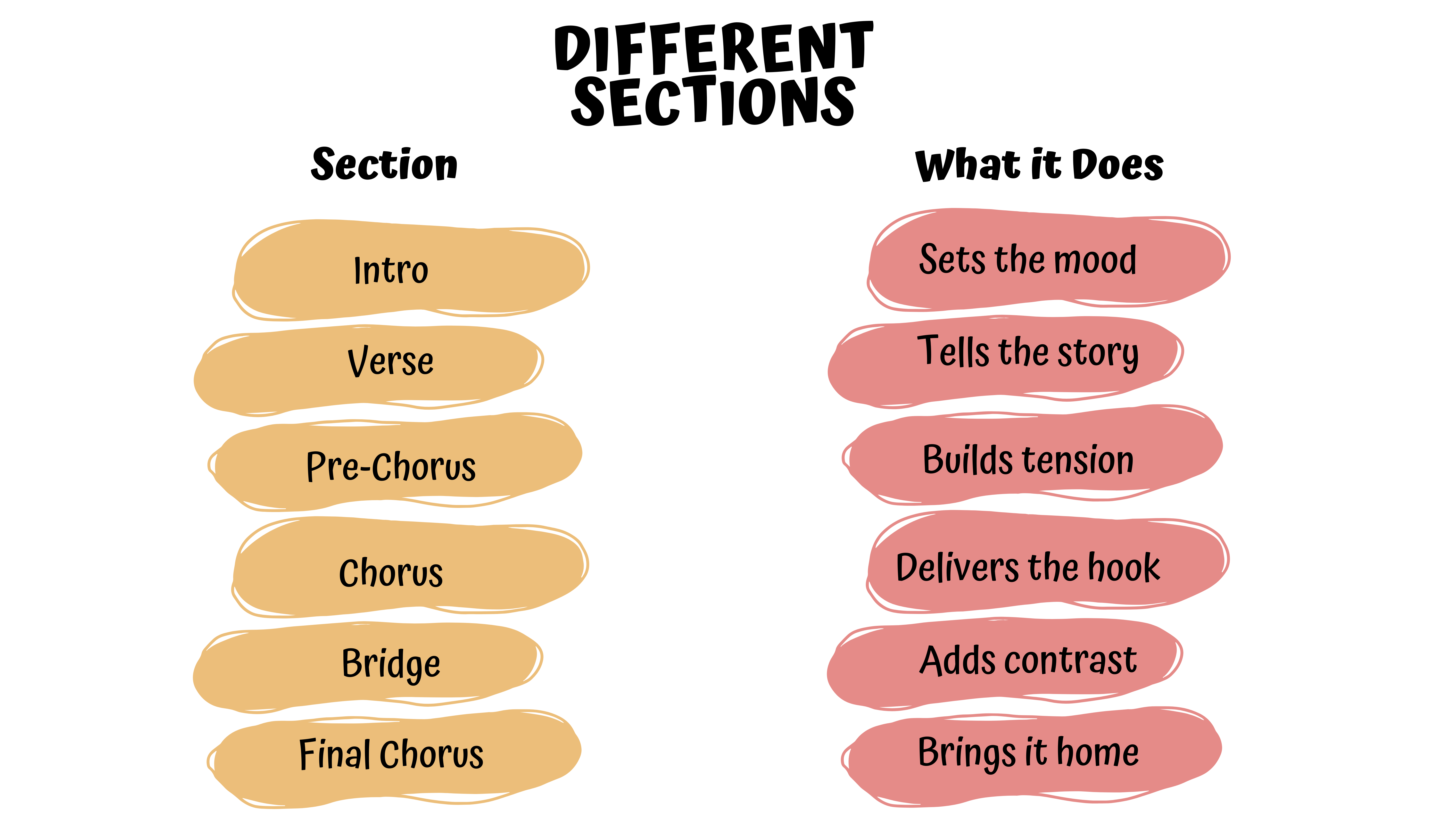
A reliable song structure template looks like this:
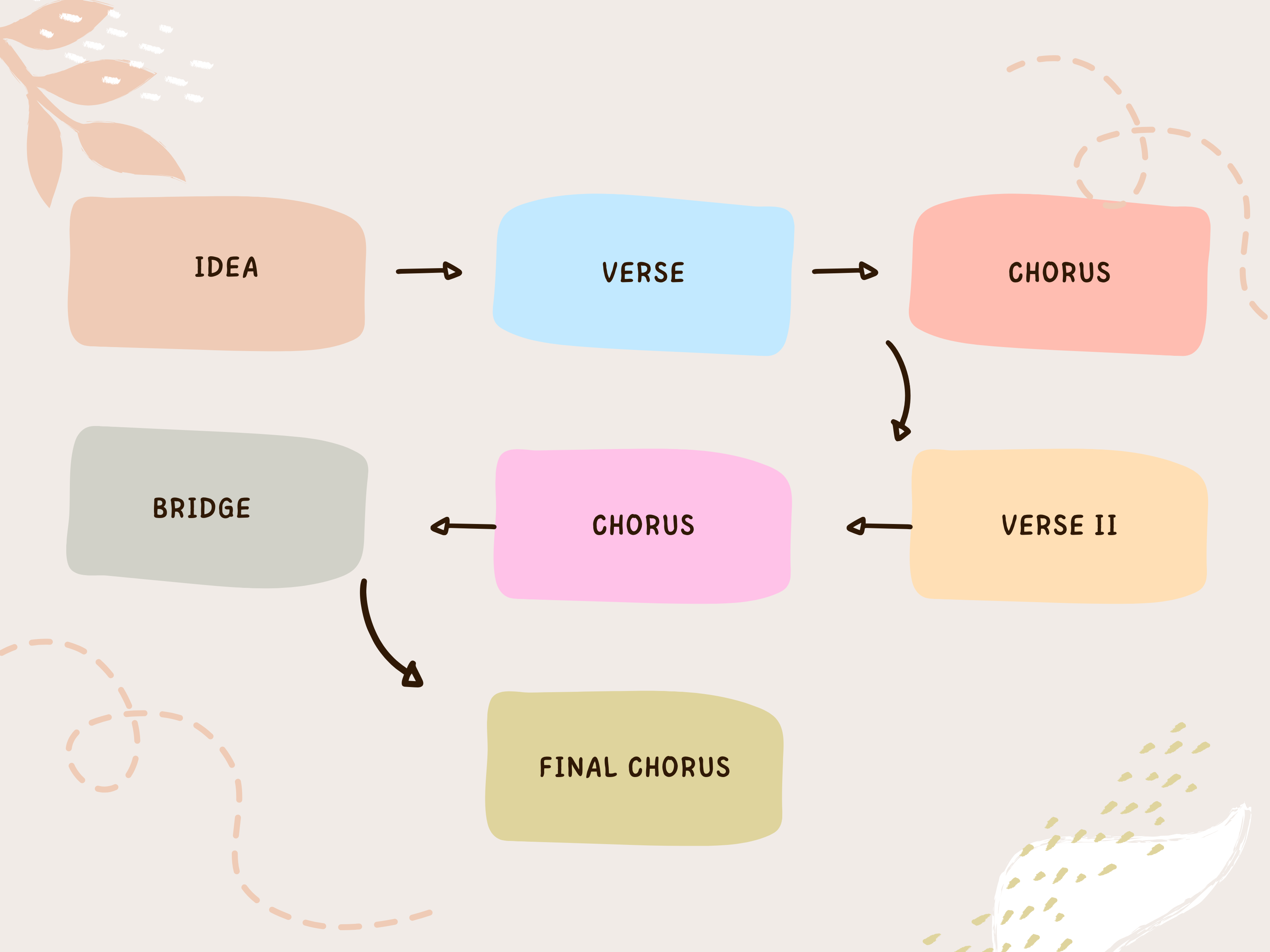
This song structure template works because it mirrors how listeners emotionally process music. Using a familiar song structure template frees your brain to focus on expression instead of decisions.
For most writers, this is the most effective structure of a song to start with.
Step 3: Write the Chorus First (Yes, Really)
The chorus is the emotional headline. If it doesn’t land, nothing else will.
When writing a chorus:
- Keep language simple
- Repeat the core idea
- Make it easy to sing after one listen
This is why song structure matters so much,the chorus is designed to repeat, stick, and resonate. In pop song structure, the chorus often appears within the first 30 seconds for this exact reason.
Step 4: Use Verses to Build, Not Compete
Verses exist to support the chorus, not outshine it.
In a strong structure of a song, verses:
- Change lyrics each time
- Add detail or story
- Lead emotionally into the chorus
If your verses feel long or unfocused, simplify. A basic song structure works best when each section has a clear job.
Step 5: Decide If You Actually Need a Bridge
Not every song needs one (Eg. Don’t Stop Me Now by Queen), and that’s okay.
A bridge works when:
- The song feels repetitive
- You want a new perspective
- The final chorus needs more impact
In modern pop song structure, bridges are often shorter or replaced with drops. Use them intentionally, not automatically.
Step 6: Match Melody to Emotion, Not Perfection
Here’s a practical rule:
If it feels good to sing, it’s probably right.
Melody and song structure evolve together. Hum freely, repeat phrases, and let rhythm guide your words. Don’t polish yet, capture first.
This approach fits every basic song structure, regardless of genre.
Step 7: Edit With Structure in Mind
Once the song exists, then you refine.
Ask:
- Does each section serve the main idea?
- Is the chorus clearly the emotional peak?
- Does the structure of a song feel balanced?
This is where understanding song structure separates finished songs from abandoned drafts.
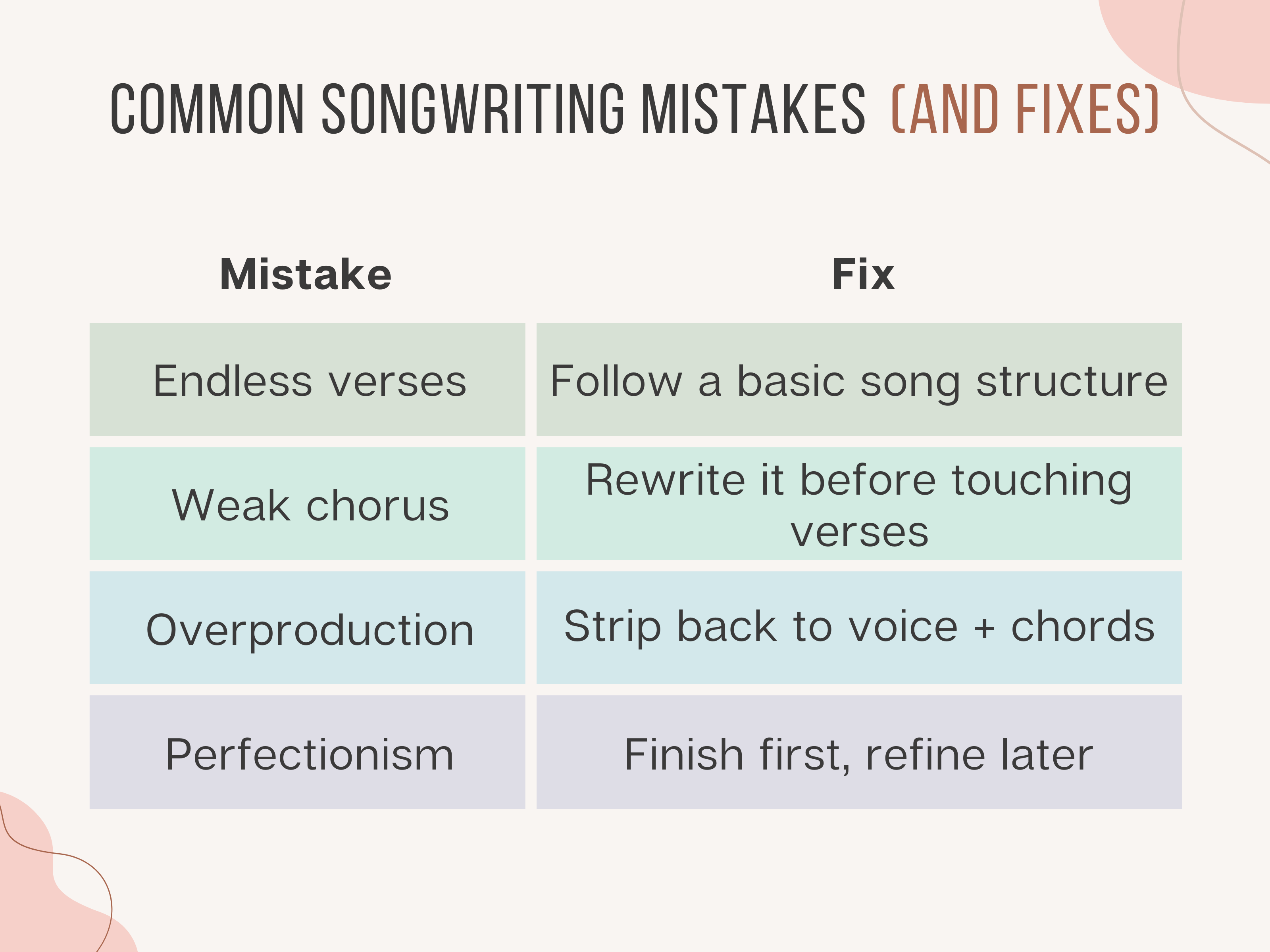
Common Songwriting Mistakes
Here are some of the Common Songwriting Mistakes and their fixes.
1. How long should a Pop song be?
Most modern songs fall between 2.5 to 3.5 minutes, especially in pop. However, length should serve the song’s emotion and structure, not streaming rules.
2. Can I write a song without knowing music theory?
Absolutely. Many successful songwriters rely on instinct, repetition, and familiar song structure rather than formal theory. Theory can help, but it’s not a requirement.
3. Should I write lyrics or melody first?
There’s no single rule. Some writers start with lyrics, others with melody or chords. The key is choosing one approach and letting the structure of a song guide the rest.
4. How many sections should a song have?
A typical basic song structure includes verses and a chorus, with an optional bridge. More sections don’t make a song better; clarity and flow do.
5. Why do most pop songs sound similar?
Because familiar pop song structure balances predictability and surprise. Listeners enjoy recognition, and structure helps songs feel instantly accessible while still allowing creativity.
Final Thought: Finish More Songs
Songwriting isn’t about waiting for inspiration; it’s about finishing. A clear song structure gives your ideas direction, not limits. Whether you use a simple song structure template or a complicated one, it exists to help you move forward when creativity wobbles. Choose a structure, commit to it, and finish the song. Do that consistently, and writing songs stops feeling intimidating and starts feeling natural.
We at GreaseRelease, have a bunch of curators on our network who are looking for new & exciting music to push on their massive playlists. If you make music and want to reach a wider audience, check out our submission platform and get a chance to reach millions of listeners! Submit your tracks now!
Don't miss my newsletter!
Join me on a music entrepreneurship journey with new tips and tricks delivered straight to your inbox.
We hate SPAM. We will never sell your information, for any reason.