Music Promotion Strategies for Independent Artists (2026)
Feb 21, 2024Music Promotion Strategies for Independent Artists: A 2026 Campaign Plan
By Tushar Mathur
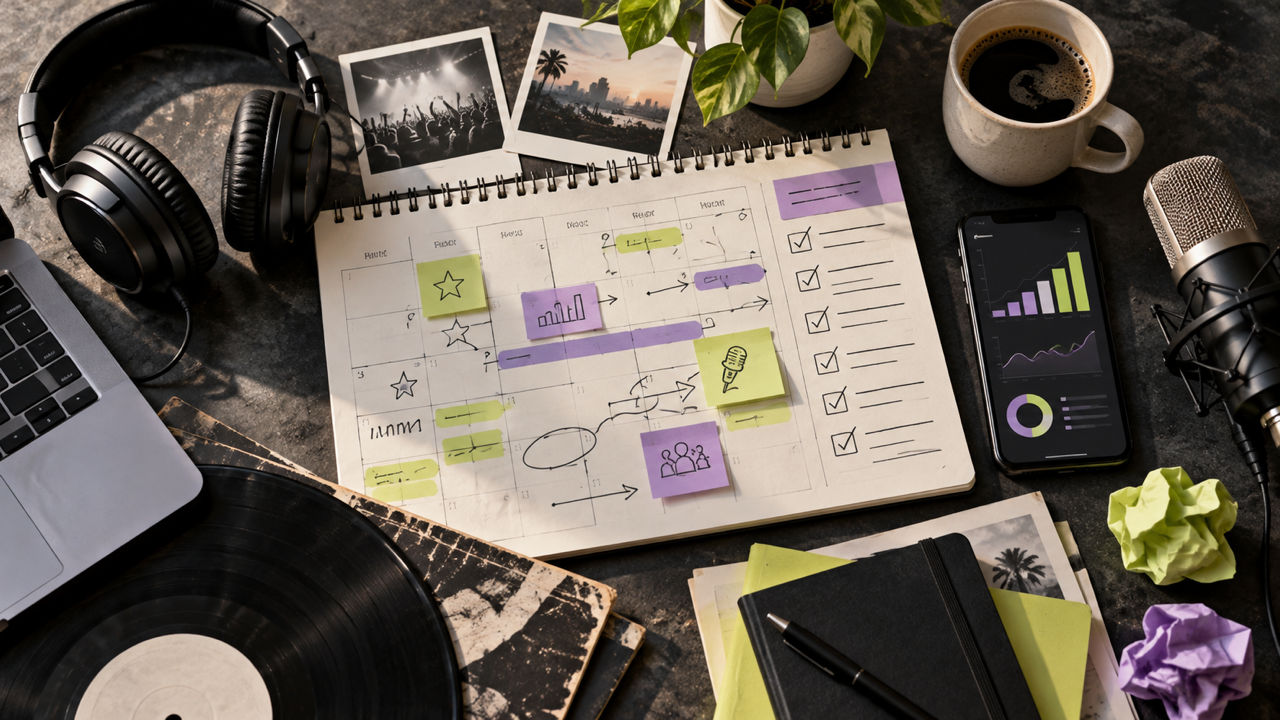
Music promotion works best as a sequence, not a pile of disconnected posts. Pick one release goal, prepare the places where listeners can act, build several creative angles, and measure what happens after the first play. This guide turns those steps into a practical six-week campaign for independent artists.
Quick answer: the strongest music promotion strategy combines a clear audience, a focused release message, platform-native artist tools, repeatable short-form creative, selective outreach, direct fan capture, and weekly measurement. You do not need every channel. You need a small system you can run consistently.
Start with one measurable campaign goal
“Get more streams” is too broad to guide decisions. Choose one primary outcome for the release and one supporting metric.
- Discovery: reach qualified new listeners. Track first-time listeners and saves.
- Engagement: turn existing listeners into repeat listeners. Track repeat streams, playlist adds, follows and release engagement.
- Conversion: move listeners to an owned channel. Track email signups, ticket clicks, merch visits or community joins.
- Industry attention: build credible proof for curators, blogs, venues or collaborators. Track relevant replies, features and placements.
Use one link destination throughout the campaign. A music smartlink can route people to their preferred service while keeping campaign traffic easier to compare.
Build the campaign foundation before posting
Promotion cannot repair a confusing artist profile or an incomplete release. Before announcing anything, check the song title, artist spelling, credits, artwork, genre and release date with your distributor. Then update your profiles, bio, photos and links.
Prepare three assets before launch:
- A clear release story: one sentence explaining what the song is about and why someone should care.
- A creative bank: six to twelve short videos or visual variations built from different hooks, lyrics, moments or stories.
- A destination: one page where a listener can stream, follow, join your list, buy or RSVP.
If your audience is still small, start with the people already closest to your music. Early engagement from real listeners gives you better feedback than inflated reach from a broad, uninterested audience.
A six-week independent music promotion plan
Weeks 1–2: set up and learn
- Define the target listener by genre, adjacent artists, geography and the situations in which they might play the song.
- Deliver the release early enough to claim it and use platform tools.
- Prepare your profile, smartlink, email signup and campaign tracking.
- Test two or three creative concepts without asking for too much. Look for watch time, comments and profile visits.
Spotify recommends pitching an unreleased focus track before release. Its artist guidance also points artists toward profile tools, followers, Promo Cards and campaign products where eligible. Treat those tools as parts of your plan rather than substitutes for an audience.
Weeks 3–4: announce and build intent
- Announce the release with the strongest creative angle from your early tests.
- Share the story behind one lyric, production decision or collaboration.
- Contact a short list of relevant curators, writers, creators and community organizers with a tailored message.
- Invite your email or community audience to pre-save, follow or reply, depending on the campaign goal.
A Spotify pre-save campaign is useful when it supports a broader release story. A pre-save count by itself is not the goal; the real value is converting attention into first-week listening and an ongoing fan relationship.
Week 5: release week
- Update your Artist Pick, links and pinned social posts.
- Publish the clearest “listen now” creative and one more personal piece that explains the song.
- Email your list once with a direct link and a reason to listen now.
- Thank real supporters and respond to comments. Do not automate fake engagement.
- Track saves, playlist adds, completion signals, repeat listening and destination clicks—not streams alone.
Week 6 and beyond: extend the release
Most releases do not finish after seven days. Spotify has reported that a large share of first-year streams can arrive after the first month. Continue with live clips, alternate performances, fan reactions, lyric explanations, creator collaborations and a second outreach angle.
Keep the concepts that attract the right listener. Retire the ones that create views without meaningful actions.
Seven promotion strategies that support the plan
1. Short-form creative testing
Make several versions of the same idea: performance, story, lyric, process, humor, reaction and context. Change one variable at a time so you can learn which opening, visual or section of the song holds attention.
2. Platform-native artist tools
Use the tools each service gives artists: profile features, editorial pitching, follower notifications, release analytics, merch and event integrations. Keep your expectations realistic and follow each platform's eligibility rules.
3. Relevant playlist and curator outreach
Research fit before sending. A smaller playlist that serves your genre and has real listener activity is more useful than a large, unrelated list. Never pay for guaranteed placement or streams. Learn how to find credible Spotify playlists and spot suspicious behavior.
4. Direct fan channels
Email, SMS and private communities reduce dependence on changing feeds. Offer something useful: early access, a live session, a release note, stems, tickets or a behind-the-scenes update. Ask permission and make leaving easy.
5. Community participation
Join scenes where your music belongs and contribute before promoting. Local shows, genre groups, creator circles and niche forums can produce stronger relationships than mass outreach.
6. Press and creator collaborations
Pitch a specific story, not “please share my song.” Give the recipient a clear reason the release fits their audience. Include a short bio, one private or public listening link, artwork, credits and your strongest proof point.
7. Small paid tests
Paid promotion can accelerate learning when your tracking and destination are ready. Start with a limited budget, test a few creatives, and optimize for a meaningful action rather than the cheapest view. Stop campaigns that cannot connect attention to listening, following or direct-fan growth.
A simple $300 campaign budget
- $120: creative production or editing support.
- $120: small paid tests across the two strongest creatives.
- $40: smartlink, email or landing-page tools.
- $20: contingency for a follow-up asset or local opportunity.
If you have no budget, replace paid testing with collaborations, direct outreach, live performances and a smaller content schedule you can sustain. See our guide to promoting music with no budget.
Measure listener quality, not vanity reach
Review the campaign once a week. Compare source, creative and outcome. Useful questions include:
- Which creative drove profile visits or full listens?
- Did saves, follows and repeat listening rise with streams?
- Which audience or community produced genuine replies?
- Did the campaign grow an email list, ticket audience or customer base?
- What should you repeat for the next release?
A promotion plan becomes valuable when it teaches you how your audience behaves. Keep a simple record of creative, spend, reach, clicks, streams, saves and direct-fan conversions.
Music promotion mistakes to avoid
- Buying guaranteed streams or playlist placement.
- Posting the same clip every day without testing a new angle.
- Sending mass pitches without checking genre or audience fit.
- Running ads before your profile, link and tracking are ready.
- Changing every part of the campaign at once, which prevents useful learning.
- Ending promotion after release week.
Ready to put your release in front of active music curators? Submit your track through GreaseRelease and choose a campaign that fits your goals.
Frequently asked questions
What is the best way to promote music independently?
Choose one measurable goal, prepare your profiles and destination, test several creative angles, use relevant artist tools and outreach, then measure saves, follows, repeat listening and direct-fan actions.
How early should I start promoting a song?
Start setup and creative testing four to six weeks before release. Deliver the song early enough to claim profiles and use platform pitching tools within their current deadlines.
How much should an independent artist spend on promotion?
Spend only what you can test and measure. A small campaign can work with $100–$300, while a no-budget campaign can use collaborations, email, community participation, live performance and consistent content.
Does social media engagement guarantee streams?
No. Views and likes can show creative interest, but they do not guarantee listening or fandom. Track downstream actions such as profile visits, saves, follows, repeat listening, signups and purchases.
Don't miss my newsletter!
Join me on a music entrepreneurship journey with new tips and tricks delivered straight to your inbox.
We hate SPAM. We will never sell your information, for any reason.