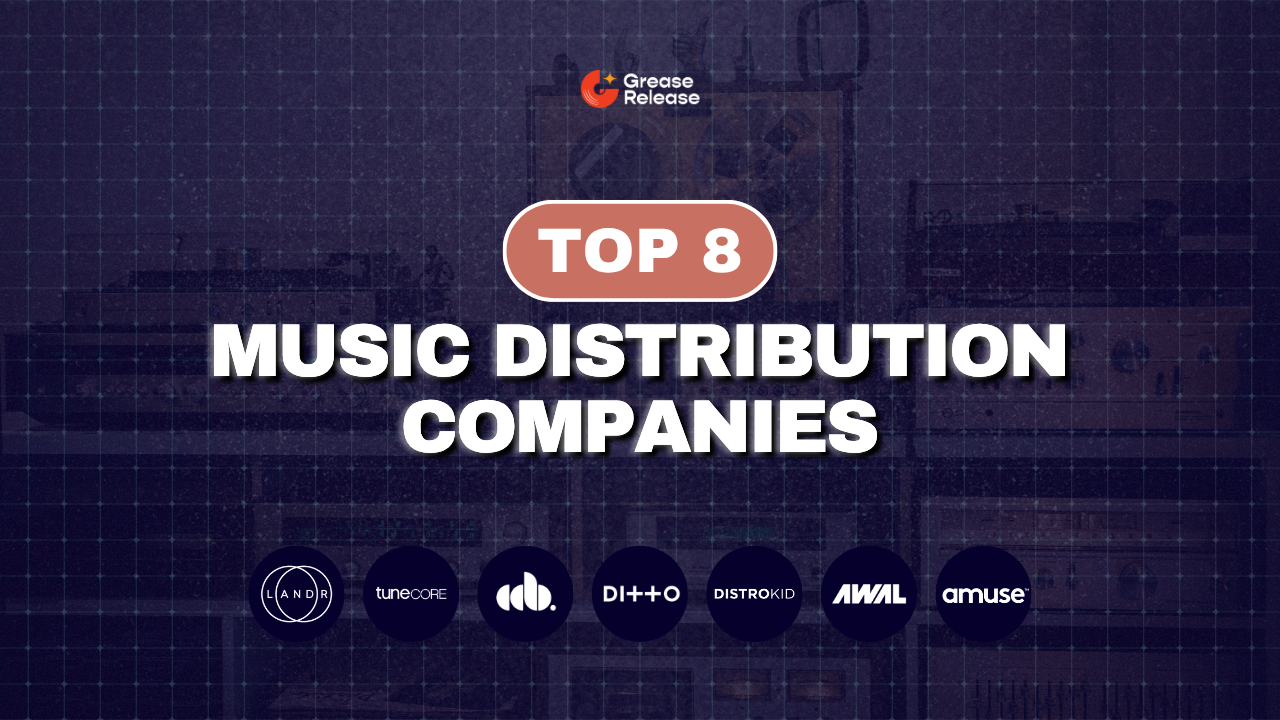
Top 8 Music Distribution Companies for Artists in 2026
Feb 25, 2026
Getting your music on streaming platforms like Spotify, Apple Music, and other major platforms has become easier than ever. But that also means choosing the right distributor, which can feel quite overwhelming. Pricing models, royalty splits, extra features, and hidden fees all vary from distributor to distributor.
In this guide, we break down seven of the most popular music distribution companies so you can decide what fits your career stage, goals, and budget.
- TuneCore
- CD Baby
- Ditto Music
- DistroKid
- AWAL
- LANDR
- Amuse
- Octtive
- FAQs
- Comparison of Music Distributors
- Conclusion
TuneCore
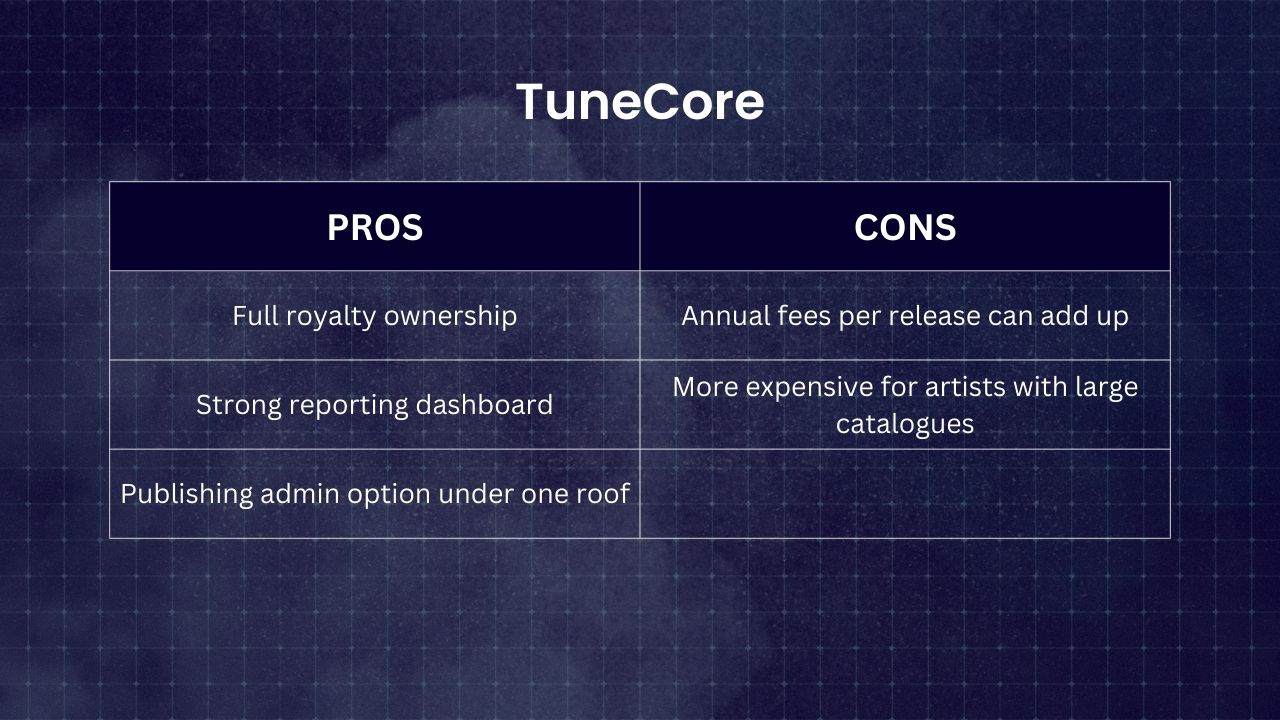
TuneCore has been around for years and is known for giving artists full control over their royalties. It is one of the more established players in the digital distribution space and is trusted by both indie artists and small labels.
Pricing
TuneCore runs on an annual renewal model. You pay per single or album each year to keep your music live on streaming platforms. The cost varies depending on whether it’s a single or an album, and they also offer optional add-ons like publishing administration.
Royalties to Artists
Artists keep 100% of their royalties. TuneCore does not take a revenue cut from streaming income.
Key Features
- Distribution to 150 plus platforms worldwide
- Publishing administration services
- YouTube Content ID monetization
- Detailed sales and streaming analytics
- Social platform distribution, including TikTok and Instagram
Pros & Cons
CD Baby
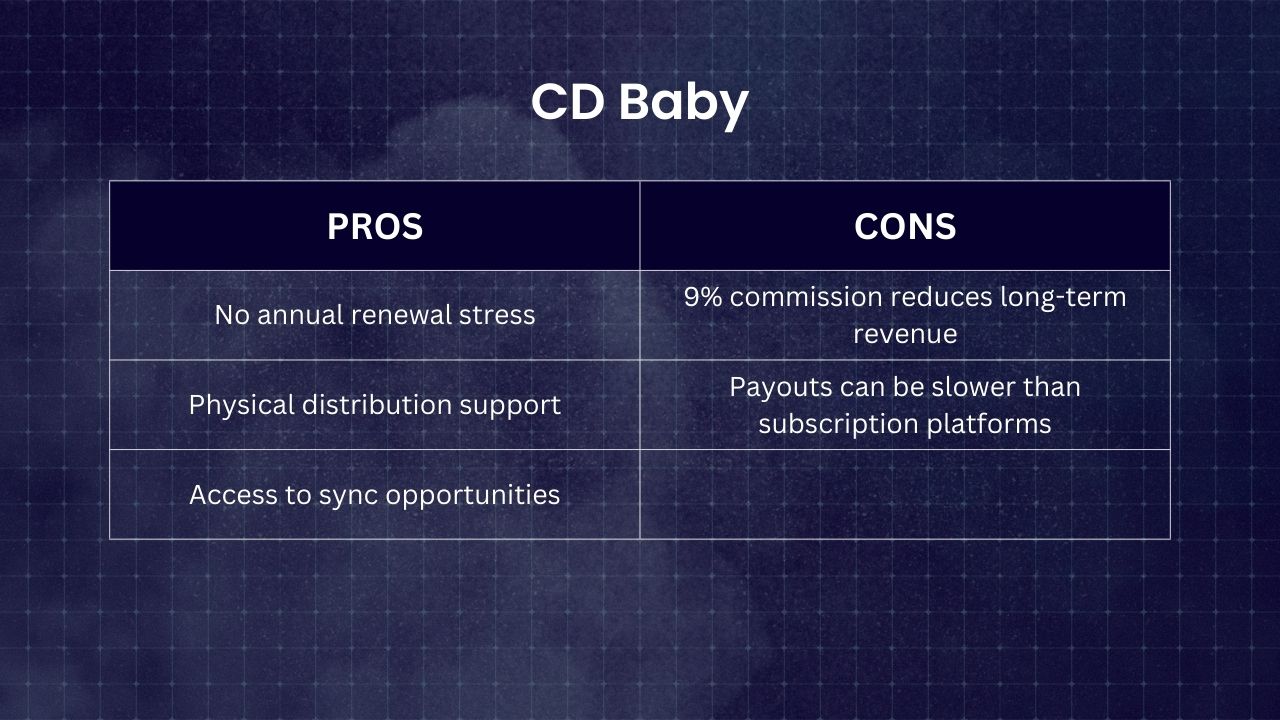
CD Baby is one of the oldest independent music distributors. Unlike subscription-based platforms, it follows a one-time payment model, which appeals to artists who prefer simplicity.
Pricing
You pay a one-time fee per release. After that, your music stays up without yearly renewals.
Royalties to Artists
Artists keep 91% of royalties. CD Baby takes a 9% commission from digital revenue.
Key Features
- Global digital distribution
- Physical CD and vinyl distribution
- Sync licensing opportunities
- Publishing administration services
- YouTube monetization
Pros & Cons
Ditto Music
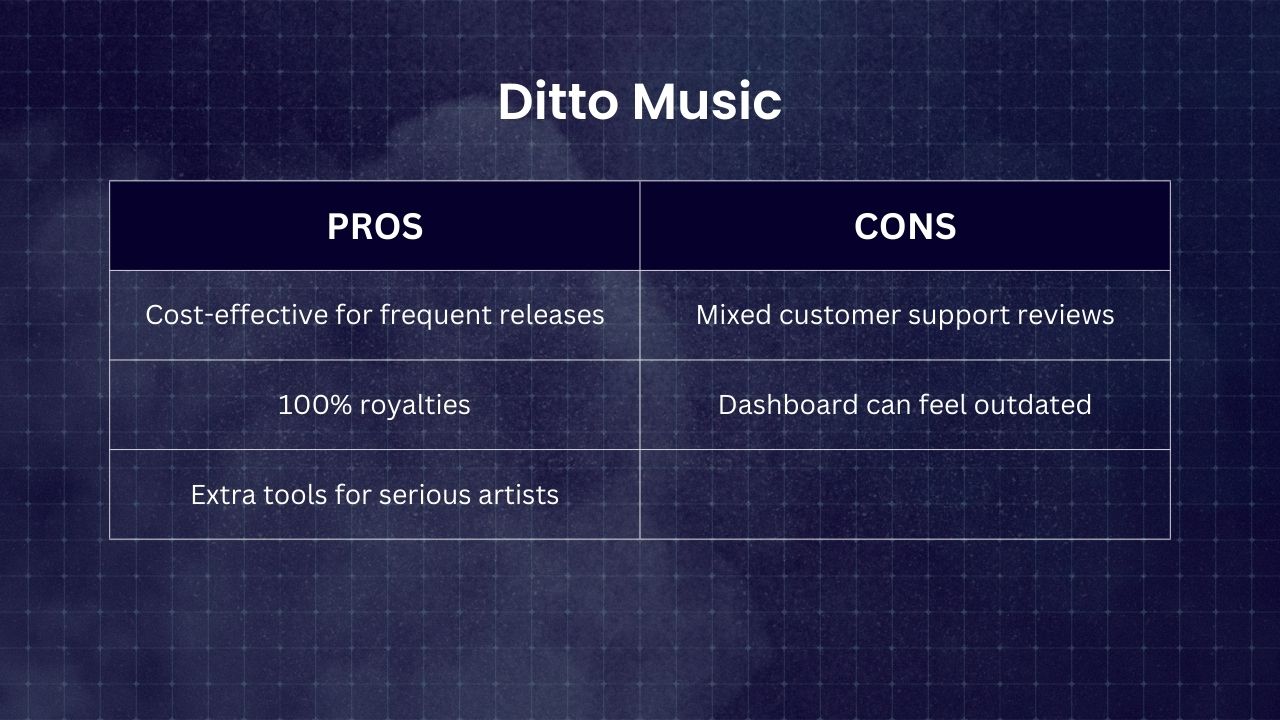
Ditto Music positions itself as a distributor plus label services company. It is popular among independent artists who want chart eligibility and more advanced services beyond just uploading music.
Pricing
Flat annual subscription with unlimited releases. No per-release charges within the plan.
Royalties to Artists
Artists retain 100% of their royalties.
Key Features
- Unlimited releases
- UK and international chart registration
- VEVO distribution
- Publishing administration
- Optional label services and promotional tools
Pros & Cons
DistroKid
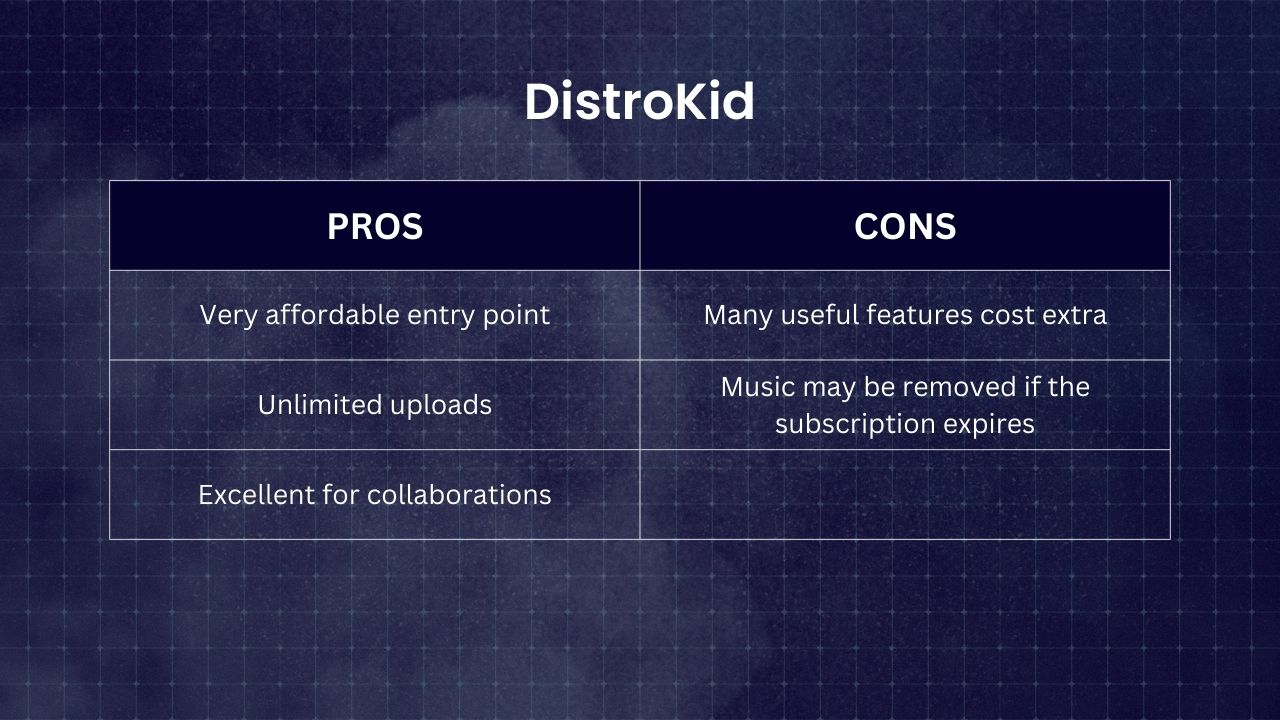
DistroKid is often the go-to choice for independent artists who want speed and affordability. It has grown rapidly due to its simple interface and unlimited upload model.
Pricing
Low-cost annual subscription that allows unlimited releases. Additional features are available as paid add-ons.
Royalties to Artists
Artists keep 100% of their streaming royalties.
Key Features
- Fast distribution turnaround
- Automatic revenue splits for collaborators
- HyperFollow smart links
- Optional YouTube Content ID
- Store maximizer feature for automatic platform updates
Pros & Cons
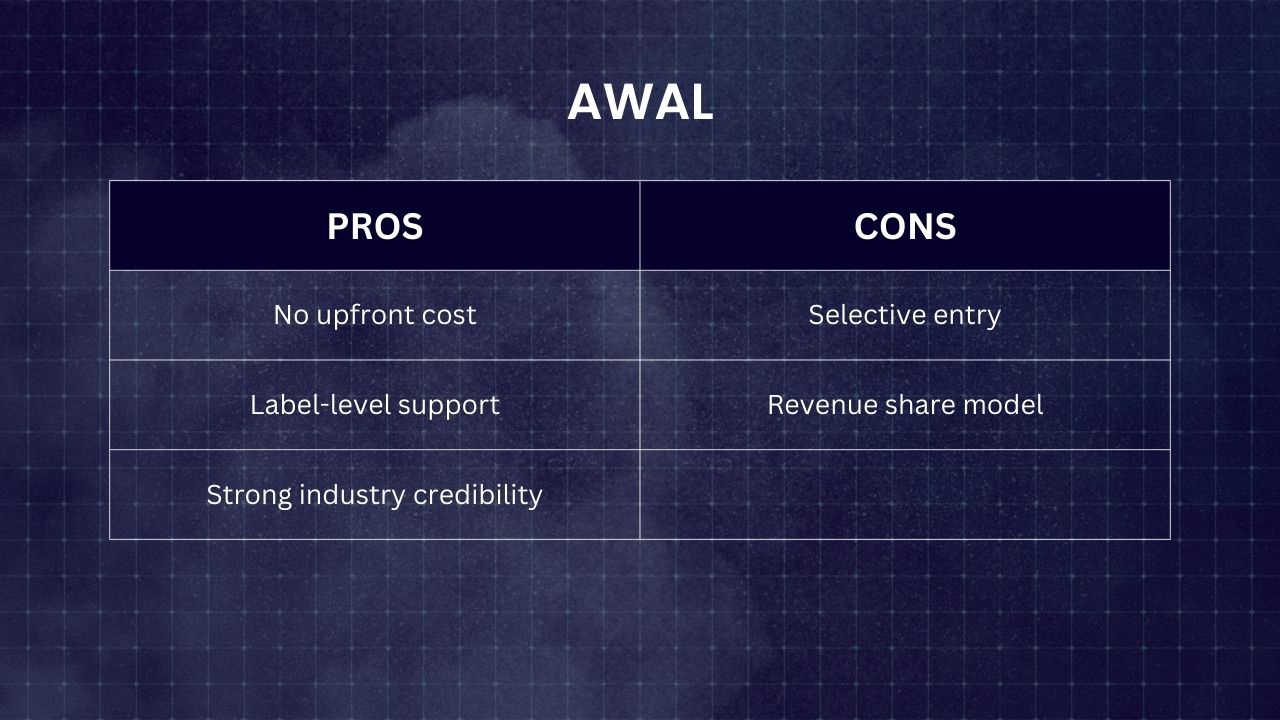
AWAL
AWAL operates differently from most distributors on this list. It is selective and works more like a modern record label company rather than a basic upload platform.
Pricing
No upfront fees. Artists must apply and be accepted.
Royalties to Artists
Typically, around 85% goes to the artist, with AWAL taking a commission.
Key Features
- Global distribution
- Marketing and playlist pitching
- Data-driven campaign support
- Funding opportunities
- Dedicated account management for selected artists
Pros & Cons
LANDR
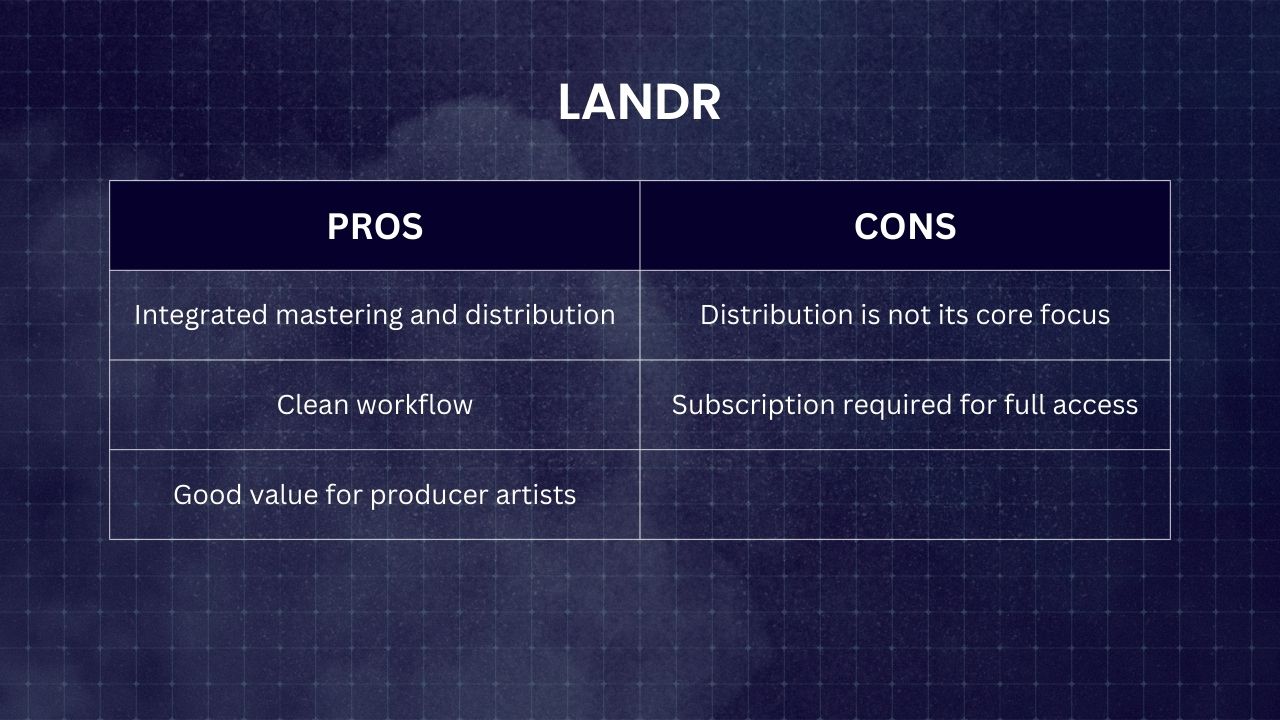
LANDR started as an AI mastering platform and later expanded into distribution. It is ideal for artists who want an all-in-one production and release ecosystem.
Pricing
Distribution is included in certain subscription plans. Higher-tier plans allow unlimited releases.
Royalties to Artists
Artists keep 100% of royalties under paid distribution plans.
Key Features
- AI-powered mastering
- Digital distribution
- Sample library access
- Collaboration tools
- Plugin marketplace
Pros & Cons
Amuse
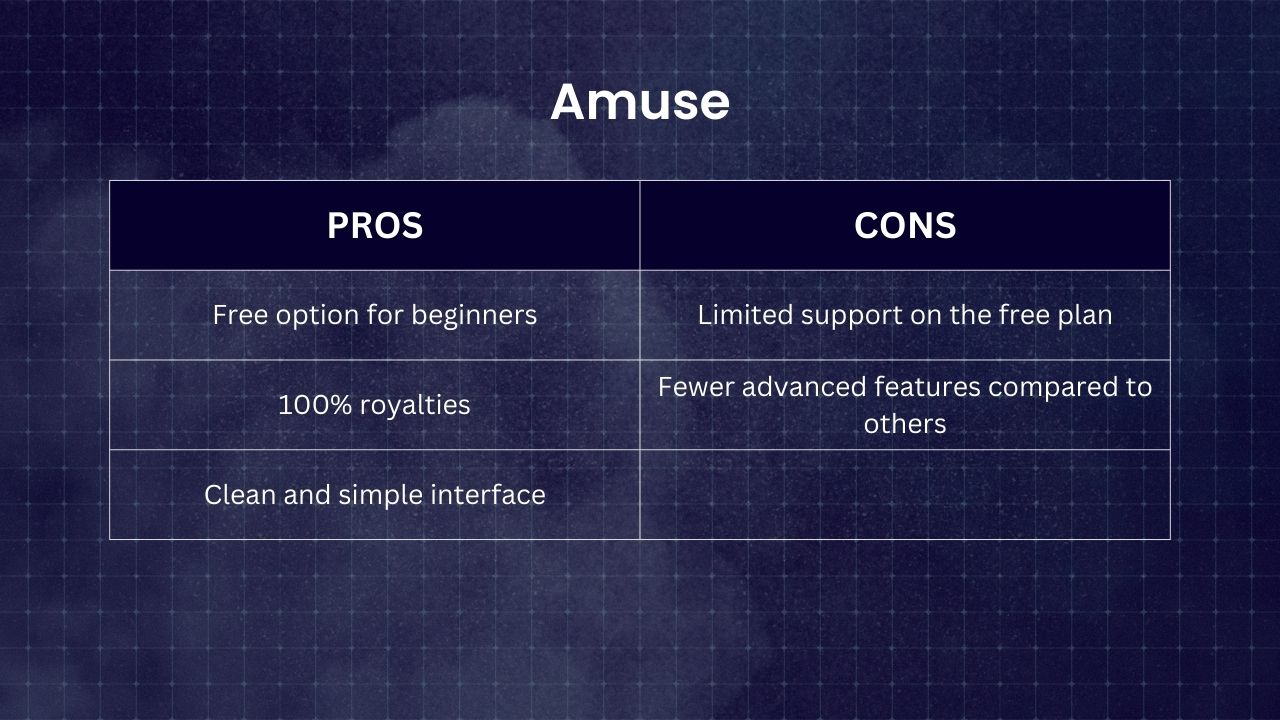
Amuse stands out because it offers a free distribution tier. It is mobile-first and designed to make releasing music simple for emerging artists.
Pricing
Free plan available. Paid Pro plan offers faster releases and additional features.
Royalties to Artists
Artists keep 100% of royalties on both plans.
Key Features
- Mobile app-based distribution
- Fast track releases on Pro plan
- Data insights
- Artist funding and label deals for selected acts
Pros & Cons
Octiive
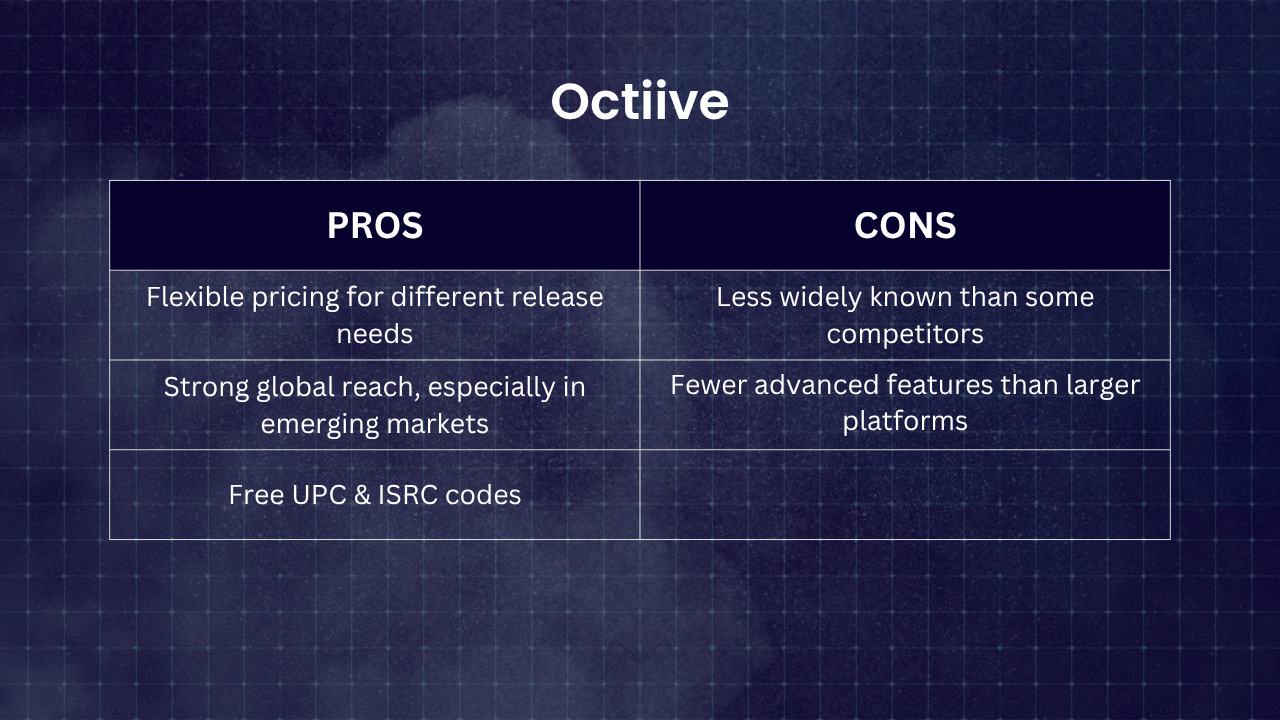
Octiive is a global music distribution platform designed for independent artists and labels looking to reach a wide range of international markets. It stands out for its flexible pricing options and extensive global distribution network, especially across emerging regions.
Pricing
Octiive offers two models: a subscription plan with unlimited releases where artists keep 100% of royalties, or a pay-per-release option where artists keep 92% of royalties.
Royalties to Artists
Artists can keep 100% of royalties under the subscription model, or 92% under the one-time payment model.
Key Features
- Distribution to 600+ stores across 140+ countries
- Access to emerging markets (Asia, Middle East, Africa)
- Playlisting opportunities
-
Chart registration support
Pros & Cons
FAQs
1. Which distributor is best for new artists?
If you are just starting, Amuse or DistroKid are easy and affordable entry points.
2. What happens if I stop paying a subscription distributor?
Your music may be removed from streaming platforms unless you renew or pay a legacy fee.
3. Are royalties paid monthly?
Most distributors pay monthly once you cross a minimum payout threshold.
4. Can I distribute to all major platforms with these services?
Yes. All seven distribute to major DSPs like Spotify, Apple Music, Amazon Music, and more.
5. Do I need a label if I use a distributor?
Not necessarily. Distributors handle delivery. Labels handle marketing, funding, and strategy.
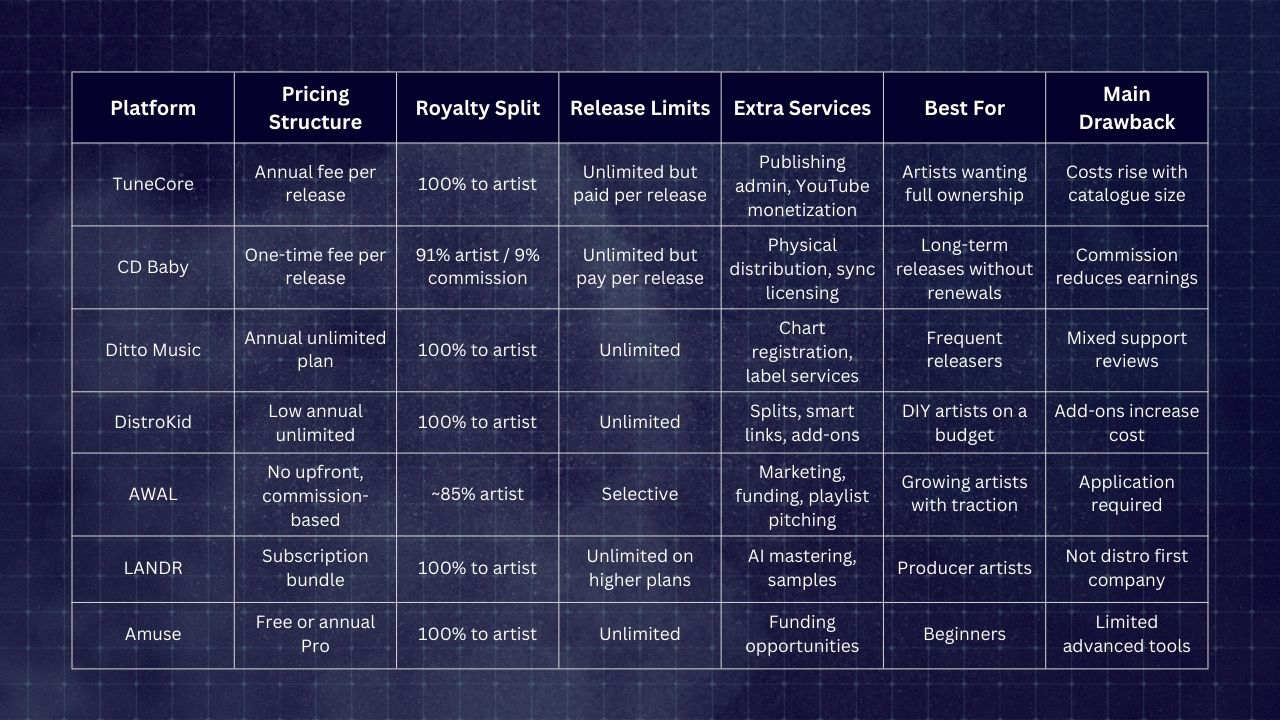
Comparison of Music Distributors
Conclusion
There is no single best music distributor for everyone. Your ideal platform depends on your release frequency, budget, and whether you need extra services like publishing, marketing, or funding.
If you are early in your journey, simplicity and affordability matter most. If you are building traction, support and industry connections may become more important. Choose the platform that aligns with where you are right now and where you realistically plan to go next.
We at GreaseRelease, have a bunch of curators on our network who are looking for new & exciting music to push on their massive playlists. If you make music and want to reach a wider audience, check out our submission platform and get a chance to reach millions of listeners! Submit your tracks now!
Don't miss my newsletter!
Join me on a music entrepreneurship journey with new tips and tricks delivered straight to your inbox.
We hate SPAM. We will never sell your information, for any reason.